
Introduction
Natural Language Processing is changing how humans interact with technology every day. From search engines and voice assistants to chat support and translation tools, this field helps machines understand human language in a meaningful way. In simple terms, it allows computers to read, listen, and respond like humans do. Because language is complex, emotional, and constantly changing, teaching machines to understand it is not easy. Still, Natural Language Processing has made major progress in recent years.
For beginners and intermediate learners, understanding this topic can feel confusing at first. There are many technical terms, methods, and use cases that seem overwhelming. However, when explained in clear language, the core ideas are easy to follow. You do not need to be a programmer or data scientist to understand the basics. You only need curiosity and a willingness to learn step by step.
What is Natural Language Processing?
Natural Language Processing is a branch of computer science that focuses on the interaction between computers and human language. Its main goal is to help machines understand, interpret, and generate language in a useful way.
Human language is full of rules, exceptions, slang, and emotions. Natural Language Processing combines linguistics, mathematics, and computer techniques to handle these challenges. It breaks text or speech into smaller parts, analyzes meaning, and produces responses.
For example, when you type a question into a search engine, Natural Language Processing helps the system understand your intent. When a voice assistant answers you, it uses language models to respond clearly.
In short, Natural Language Processing turns words into data and data into understanding.
Why is Natural Language Processing Important?
Natural Language Processing is important because language is the main way humans communicate. Most digital information is text-based, and machines need a way to understand it.
Here are some key reasons why it matters:
It saves time by automating tasks like sorting emails and analyzing feedback.
It improves user experience through chat support and voice tools.
It helps businesses understand customer opinions and needs.
It makes technology more accessible for different languages and abilities.
Without Natural Language Processing, computers would struggle to handle everyday communication tasks. Its importance will continue to grow as more data is created every second.
Detailed Step-by-Step Guide
Step 1: Understanding Text Data
The first step in Natural Language Processing is collecting text or speech data. This data can come from emails, social media, reviews, or recordings.
The data is often messy and unstructured. It may include spelling errors, slang, or incomplete sentences. Preparing this data is essential before analysis.
Step 2: Text Cleaning and Preparation
Text cleaning removes unnecessary elements like extra spaces, symbols, or repeated words. This step improves accuracy.
Common tasks include:
- Converting text to lowercase
- Removing punctuation
- Fixing spelling errors
Clean data helps systems focus on meaning instead of noise.
Step 3: Tokenization
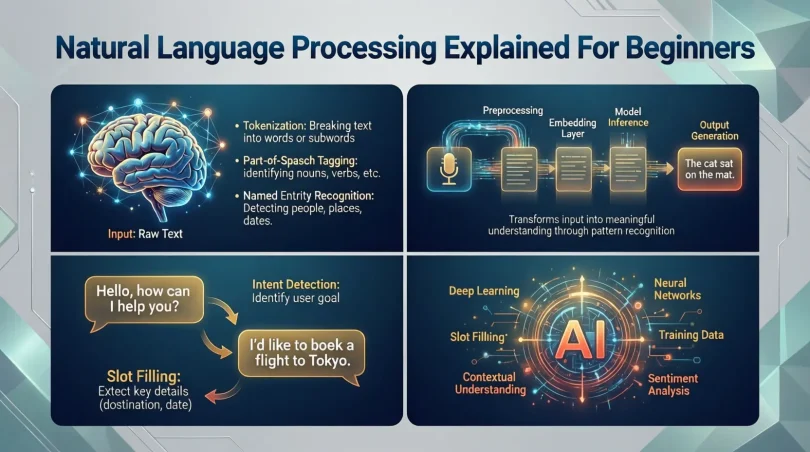
Tokenization breaks text into smaller units called tokens. These can be words, phrases, or sentences.
For example, the sentence “Language matters a lot” becomes three tokens. This makes it easier for machines to process language step by step.
Step 4: Removing Stop Words
Stop words are common words like “is,” “the,” and “and.” They often do not add much meaning.
Removing them helps focus on important words that carry real information.
Step 5: Stemming and Lemmatization
These methods reduce words to their base form. For example, “running” becomes “run.”
This step helps systems understand that different word forms have the same meaning.
Step 6: Understanding Meaning
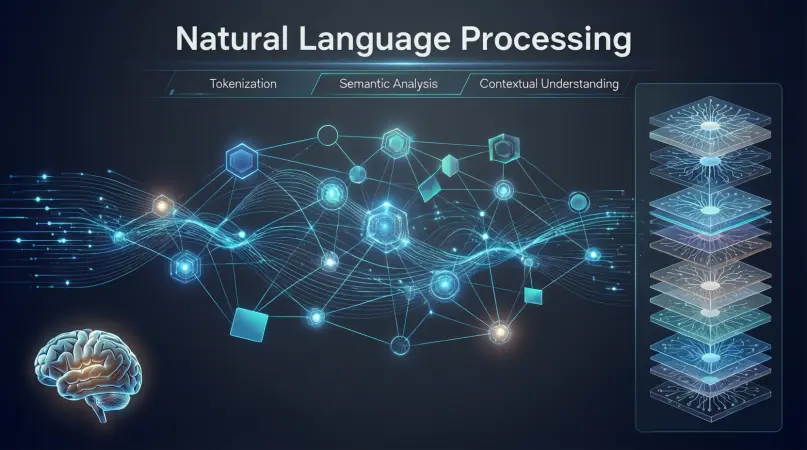
At this stage, Natural Language Processing tries to understand context and intent. It analyzes grammar, sentence structure, and relationships between words.
This step is critical for accurate interpretation.
Step 7: Generating Output
Finally, the system produces an output. This could be a response, summary, translation, or classification result.
The quality of the output depends on how well the earlier steps were handled.
Benefits of Natural Language Processing
- Improves customer support efficiency
- Saves time and reduces manual work
- Helps analyze large volumes of text
- Enhances user interaction with technology
- Supports multiple languages and accessibility
- Provides valuable business insights
These benefits explain why Natural Language Processing is widely adopted across industries.
Disadvantages / Risks
- Language ambiguity can cause errors
- Cultural and context differences are hard to capture
- Data privacy concerns may arise
- Bias in data can affect results
- High-quality data is often required
Understanding these risks helps users apply Natural Language Processing responsibly.
Common Mistakes to Avoid
One common mistake is ignoring data quality. Poor data leads to poor results.
Another mistake is expecting perfect accuracy. Human language is complex, and errors can happen.
Some people also overlook ethical concerns. Bias and privacy should always be addressed.
Finally, using overly complex methods without understanding basics can create confusion.
FAQs
What is the main goal of Natural Language Processing?
The main goal is to help computers understand and use human language effectively. This includes reading, listening, and responding accurately.
Is Natural Language Processing only for experts?
No, beginners can learn the basics easily. Many tools and resources are designed for non-experts.
Where is Natural Language Processing used?
It is used in search engines, chat support, translation tools, sentiment analysis, and voice assistants.
Does Natural Language Processing understand emotions?
It can detect emotional tone to some extent, but it does not truly feel emotions like humans.
Is data privacy a concern in Natural Language Processing?
Yes, handling personal text data requires strong privacy and security measures.
Can Natural Language Processing work with all languages?
It can work with many languages, but accuracy varies depending on data availability.
Expert Tips & Bonus Points
Start with simple concepts before moving to advanced techniques. Practice with real examples to build understanding.
Always focus on clean and diverse data. This improves results and reduces bias.
Keep learning, as language and technology evolve constantly. Staying updated is key.
Finally, think ethically. Responsible use builds trust and long-term success.
Conclusion
Natural Language Processing plays a vital role in modern technology. It bridges the gap between human communication and computer understanding. By turning language into structured data, it allows machines to assist, analyze, and respond in useful ways. From daily searches to business decisions, its impact is everywhere.
For beginners and intermediate learners, the journey starts with understanding basic steps like text cleaning, tokenization, and meaning analysis. These foundations make advanced concepts easier to grasp later. While there are risks such as bias and privacy concerns, careful planning and ethical practices can reduce them.