
Introduction
Artificial intelligence (AI) is transforming the way we live, work, and interact with technology. From healthcare to finance, transportation to entertainment, AI systems are becoming an essential part of modern life. However, with great power comes great responsibility. AI ethics and governance have emerged as critical areas to ensure these technologies are developed and used responsibly.
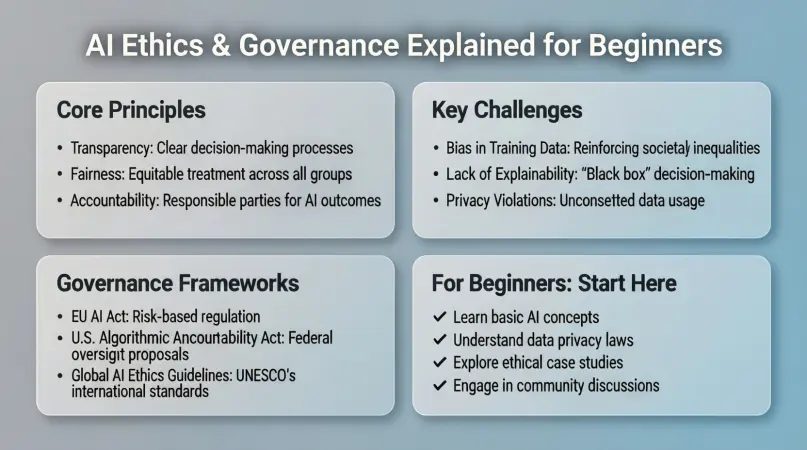
AI ethics is about understanding the moral implications of AI, while AI governance provides the rules, frameworks, and policies to manage AI’s impact. Together, they guide organizations, governments, and individuals to make AI safe, fair, and transparent. Without proper governance, AI can unintentionally reinforce biases, invade privacy, or make decisions that harm society.
What is AI Ethics & Governance?
AI ethics refers to the moral principles that guide how AI systems are designed, developed, and deployed. It focuses on fairness, accountability, transparency, privacy, and safety. AI ethics asks important questions like:
- Is the AI system fair to all users?
- Does it respect privacy?
- Are decisions explainable and accountable?
AI governance, on the other hand, is the system of policies, rules, and frameworks that organizations use to manage AI’s risks and impacts. It ensures that AI systems comply with laws, ethical standards, and organizational values. Governance covers areas such as:
- Risk management and mitigation
- Ethical decision-making frameworks
- Oversight and accountability measures
- Regulatory compliance
In simple terms, ethics is about “what is right,” and governance is about “how to manage it responsibly.” Together, they ensure AI contributes positively without unintended harm.
Why is AI Ethics & Governance Important?
The importance of AI ethics and governance cannot be overstated. AI impacts almost every part of modern life, and without careful oversight, it can cause serious problems. Here are the key reasons why AI ethics and governance matter:
- Prevent Bias and Discrimination: AI systems often learn from historical data. Without ethical oversight, they can reinforce biases related to race, gender, or socioeconomic status.
- Enhance Trust: Ethical AI builds trust among users, employees, and stakeholders. People are more likely to adopt AI when they know it is transparent and fair.
- Ensure Safety: Poorly governed AI can make dangerous decisions in healthcare, transportation, or finance. Governance frameworks reduce risks and improve safety.
- Comply with Regulations: Governments worldwide are introducing AI regulations. Governance ensures organizations meet legal and ethical standards.
- Protect Privacy: AI collects and processes vast amounts of personal data. Ethical frameworks safeguard sensitive information and prevent misuse.
- Promote Accountability: Clear governance structures make it easier to identify responsibility when AI systems fail or cause harm.
By prioritizing ethics and governance, organizations can leverage AI responsibly while avoiding reputational, legal, and societal risks.
Detailed Step-by-Step Guide to AI Ethics & Governance
Implementing AI ethics and governance may seem challenging, but breaking it down into steps can make it manageable. Below is a step-by-step guide:
Step 1: Define Ethical Principles
Start by defining the core ethical principles that will guide AI development:
- Fairness: Ensure AI treats all users equally.
- Transparency: Make AI decisions understandable.
- Privacy: Protect user data.
- Accountability: Establish responsibility for AI actions.
- Safety: Prioritize user safety in all AI applications.
Document these principles clearly to create a foundation for governance policies.
Step 2: Establish Governance Framework
A governance framework outlines the rules, roles, and responsibilities for AI oversight:
- Create a dedicated AI ethics committee.
- Define approval processes for AI projects.
- Implement monitoring systems for AI performance.
- Set escalation procedures for ethical issues.
This framework ensures consistency and accountability across the organization.
Step 3: Conduct Risk Assessments
Identify potential risks before deploying AI systems:
- Bias and discrimination risks
- Privacy and data security risks
- Safety risks in automated decisions
- Legal and regulatory compliance risks
Use tools like AI audits, scenario simulations, and data testing to evaluate these risks.
Step 4: Implement Transparency Measures
Transparency is crucial for trust:
- Provide clear explanations for AI decisions.
- Document data sources and algorithms.
- Allow users to challenge or question AI outputs.
Transparent AI reduces misunderstandings and improves adoption.
Step 5: Train Teams on Ethical AI
Educate employees and stakeholders about ethical AI practices:
- Conduct workshops and seminars.
- Share case studies of AI misuse.
- Promote awareness of biases, safety, and privacy issues.
Knowledgeable teams are better equipped to uphold ethics and governance.
Step 6: Monitor and Audit AI Systems
Continuous monitoring ensures compliance and effectiveness:
- Track AI decisions for accuracy and fairness.
- Audit data inputs regularly for bias.
- Review governance processes periodically.
Regular audits prevent ethical breaches and reduce risks.
Step 7: Update Policies and Practices
AI technology evolves rapidly, so governance policies must also adapt:
- Review ethical principles annually.
- Incorporate new regulations and industry standards.
- Adjust risk management strategies based on AI performance.
Flexibility ensures long-term ethical compliance.
Benefits of AI Ethics & Governance

Implementing AI ethics and governance brings numerous advantages:
- Builds trust with users and stakeholders
- Reduces legal and regulatory risks
- Prevents biased or unfair decisions
- Ensures data privacy and security
- Improves safety and reliability of AI systems
- Enhances organizational reputation
- Promotes responsible innovation
Organizations that prioritize ethics gain a competitive edge while contributing to societal good.
Disadvantages / Risks
Even with ethics and governance, challenges exist:
- Implementation can be time-consuming and costly
- Overly rigid policies may slow innovation
- Continuous monitoring requires resources and expertise
- Risk of incomplete coverage if frameworks are not thorough
- Ethical conflicts may arise between stakeholders
- Regulatory requirements vary across regions
Awareness of these risks helps organizations balance ethics and efficiency.
Common Mistakes to Avoid
When implementing AI ethics and governance, beginners often make these mistakes:
- Ignoring Bias in Data: Skipping data audits can lead to unfair AI outcomes.
- Lack of Transparency: Users and stakeholders may distrust AI without clear explanations.
- Overlooking Privacy Concerns: Neglecting data protection can result in legal penalties.
- No Defined Accountability: Without clear responsibility, ethical failures can escalate.
- Treating Governance as a One-Time Task: AI governance requires continuous updates.
- Neglecting Training: Teams must understand ethical principles; otherwise, policies fail in practice.
Avoiding these mistakes strengthens ethical compliance and user trust.
FAQs About AI Ethics & Governance
1. What is the difference between AI ethics and AI governance?
AI ethics focuses on moral principles, while AI governance provides the rules and frameworks to manage AI responsibly. Ethics answers “what is right,” governance answers “how to manage it.”
2. Why is AI ethics important for beginners?
Even at a beginner level, understanding ethics helps prevent bias, ensures privacy, and promotes fair AI use. Early adoption of ethical practices builds responsible habits.
3. How can organizations implement AI governance effectively?
Effective implementation involves defining ethical principles, setting up governance frameworks, conducting risk assessments, training teams, and monitoring AI systems continuously.
4. What are common ethical issues in AI?
Common issues include bias, discrimination, privacy invasion, lack of transparency, accountability gaps, and unsafe decision-making.
5. How does AI governance build trust?
Governance provides clear rules, oversight, and accountability, ensuring AI operates fairly, safely, and transparently. This transparency builds confidence among users and stakeholders.
6. Can AI ethics reduce legal risks?
Yes. Ethical AI practices, like protecting user data and preventing discrimination, align with laws and regulations, reducing the risk of legal penalties.
7. How often should AI governance policies be updated?
Policies should be reviewed at least annually, but updates may be needed sooner if technology, regulations, or organizational needs change.
8. What tools can help monitor ethical AI?
AI auditing software, bias detection tools, scenario simulations, and data monitoring platforms help organizations maintain ethical compliance.
9. Is AI governance only for large organizations?
No. Small and medium-sized organizations also benefit from governance to reduce risks, comply with laws, and build user trust.
Expert Tips & Bonus Points
- Start Small: Begin with one AI project to implement ethical practices, then expand across the organization.
- Use Diverse Data: Diverse datasets reduce bias and improve fairness.
- Document Everything: Keep detailed records of AI decisions, policies, and audits.
- Engage Stakeholders: Involve users, regulators, and employees in ethical discussions.
- Benchmark Best Practices: Learn from successful AI governance models in your industry.
- Automate Monitoring: Use AI tools to track performance, detect bias, and flag risks automatically.
Bonus: Always consider the societal impact of your AI system. Ethics isn’t just compliance—it’s a responsibility to people.
Conclusion
AI ethics and governance are essential pillars for the responsible development and use of artificial intelligence. By understanding and applying ethical principles, organizations can prevent harm, build trust, and ensure fairness. Governance frameworks provide the structure needed to monitor, manage, and adapt AI systems safely.
Beginners should focus on learning the basics of ethical AI, understanding risks, and implementing simple governance practices. Intermediate users can expand by conducting regular audits, engaging stakeholders, and updating policies with emerging standards.