
Introduction
Computer Vision is one of the most exciting fields in modern technology today. It allows computers to see, understand, and interpret images and videos in a way that feels almost human. From unlocking your phone with your face to self driving cars detecting roads, Computer Vision is working silently behind the scenes. For beginners and intermediate learners, this topic may sound complex, but it does not have to be confusing.
In simple terms, Computer Vision helps machines understand visual information just like people do with their eyes and brain. It combines mathematics, data, and smart algorithms to turn images into useful decisions. Because digital images are everywhere today, this technology has become extremely important across many industries.
What is Computer Vision?
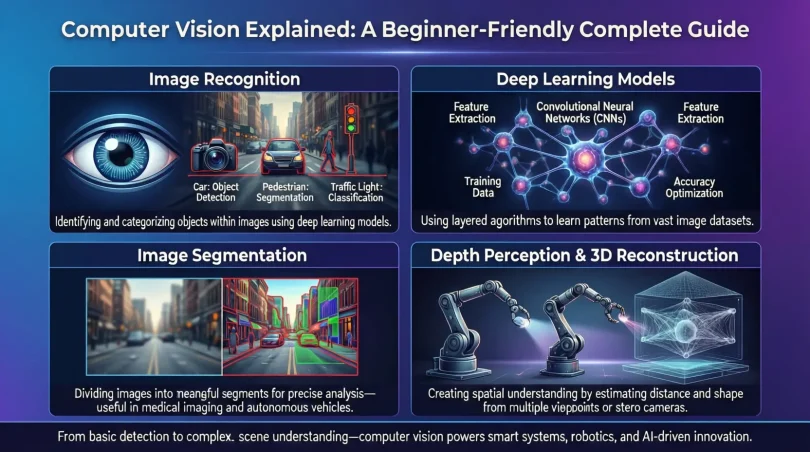
Computer Vision is a field of technology that enables computers to analyze and understand images and videos. It teaches machines how to recognize objects, faces, text, and even emotions from visual data.
Instead of just storing pictures, computers learn to extract meaningful information from them. For example, a computer can identify a cat in an image or read numbers from a license plate.
Computer Vision works by using algorithms that process pixels and patterns. These algorithms learn from large sets of images to improve accuracy over time.
In short, Computer Vision gives computers the power to see and make decisions based on what they see.
Why is Computer Vision Important?
Computer Vision is important because visual data is everywhere. Humans create and consume images and videos every day, and machines need to understand them too.
This technology helps reduce human effort by automating visual tasks. It also improves accuracy and speed in areas where humans may make mistakes.
Additionally, Computer Vision supports innovation. Many modern tools and services would not exist without it. From healthcare to transportation, it improves safety, efficiency, and productivity.
As technology continues to evolve, the importance of Computer Vision will only increase.
Detailed Step by Step Guide
Step 1: Image Collection
The first step in Computer Vision is collecting images or videos. These visuals are the raw data that the system will learn from.
Images can come from cameras, sensors, or online sources. Quality images lead to better results.
Step 2: Data Preparation
After collecting images, they must be cleaned and prepared. This includes resizing, removing noise, and labeling objects.
For example, labeling images of cars helps the system learn what a car looks like.
Step 3: Feature Extraction
In this step, important details are extracted from images. These details include edges, shapes, colors, and textures.
Feature extraction helps computers focus on meaningful patterns instead of every pixel.
Step 4: Model Training
Now the system learns from the prepared data. Algorithms study the images and learn patterns.
The more data used, the better the learning results.
Step 5: Testing and Validation
The trained model is tested using new images. This checks accuracy and performance.
Mistakes are analyzed and improvements are made.
Step 6: Deployment
Once the system performs well, it is deployed into real applications. It can now analyze images in real time.
Benefits of Computer Vision
- Automates repetitive visual tasks
- Improves accuracy and reduces errors
- Saves time and operational costs
- Enhances safety in critical industries
- Supports innovation and smart solutions
- Works continuously without fatigue
Disadvantages / Risks
- Requires large amounts of data
- Can be expensive to develop
- Privacy concerns with image data
- Errors may cause serious consequences
- Needs regular updates and monitoring
Common Mistakes to Avoid
One common mistake is using low quality images. Poor data leads to poor results.
Another mistake is ignoring data bias. Biased images can create unfair outcomes.
Many beginners also skip testing, which causes unexpected failures later.
Finally, not updating models regularly reduces performance over time.
FAQs
What is Computer Vision used for?
Computer Vision is used in healthcare, security, transportation, retail, and entertainment. It helps analyze images and videos automatically.
Is Computer Vision difficult to learn?
It may seem complex at first, but with basic knowledge and practice, beginners can understand it easily.
Does Computer Vision require coding?
Yes, basic programming skills help. However, many tools make learning easier.
How accurate is Computer Vision?
Accuracy depends on data quality and training. With good data, results can be very accurate.
Can small businesses use Computer Vision?
Yes, many affordable tools now make it accessible to small businesses.
Is Computer Vision safe?
It is safe when used responsibly. Proper data protection is essential.
Expert Tips & Bonus Points
Start with simple projects before moving to complex ones.
Focus on data quality rather than quantity.
Always test models in real conditions.
Stay updated with industry trends and tools.
Conclusion
Computer Vision has transformed how machines interact with the visual world. It allows computers to see, analyze, and understand images in a powerful way. From healthcare to smart cities, this technology is shaping the future of innovation.
For beginners and intermediate learners, understanding Computer Vision opens many opportunities. It builds a strong foundation for working with modern digital systems. By learning the basics, steps, benefits, and risks, you gain clarity and confidence.