
Introduction
AI in Healthcare is changing how doctors, nurses, hospitals, and patients experience medical care. In simple words, it means using smart computer systems to help with health-related tasks. These systems can analyze data, learn from patterns, and support better decisions. As a result, healthcare is becoming faster, more accurate, and more personal.
Today, hospitals deal with large amounts of medical data every day. Managing this data manually is difficult and time-consuming. This is where AI in Healthcare plays an important role. It helps doctors detect diseases early, supports treatment planning, and improves patient care overall. Even small clinics are starting to use these tools to save time and reduce errors.
What is AI in Healthcare?
AI in Healthcare refers to the use of intelligent computer systems in medical and health-related fields. These systems are designed to think, learn, and improve based on data. They can analyze medical records, images, lab results, and patient history in a very short time.
In healthcare, AI is used to support doctors rather than replace them. For example, an AI system can review thousands of medical images and highlight areas that need attention. A doctor then reviews the findings and makes the final decision. This teamwork improves accuracy and saves valuable time.
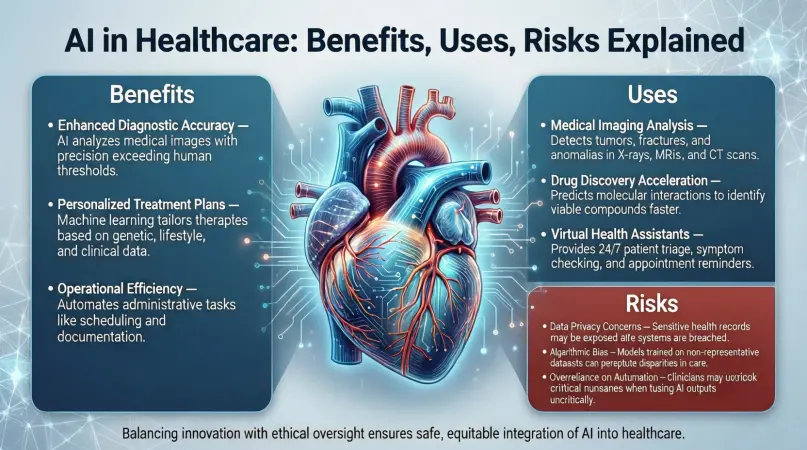
AI in Healthcare includes several technologies. These may involve machine learning, data analysis, and pattern recognition. Together, they help identify trends that humans might miss. For instance, AI can predict disease risks by studying lifestyle data and past medical history.
Another common use is virtual health assistants. These tools answer basic patient questions, remind people to take medicines, and schedule appointments. As a result, healthcare becomes more accessible and organized.
Overall, AI in Healthcare focuses on improving care quality, reducing workload, and supporting better health outcomes. It continues to grow as more data becomes available and systems become smarter.
Why is AI in Healthcare Important?

AI in Healthcare is important because it solves many challenges faced by modern medical systems. One major issue is the shortage of healthcare professionals. AI tools help manage routine tasks, allowing doctors and nurses to focus on critical cases.
Another reason is accuracy. Human error can happen, especially when professionals are tired or overloaded. AI systems can review information carefully and consistently. This reduces mistakes in diagnosis, prescriptions, and treatment planning.
Speed is also a key factor. In emergency situations, quick decisions can save lives. AI in Healthcare can analyze patient data within seconds and suggest possible actions. This support can be crucial in urgent care settings.
Cost management is another benefit. Healthcare can be expensive for both providers and patients. By improving efficiency and reducing unnecessary tests, AI helps lower overall costs. Hospitals can use resources more wisely.
Finally, AI in Healthcare supports preventive care. By analyzing long-term data, it can identify risks early and suggest lifestyle changes. This helps people stay healthier and reduces the need for complex treatments later.
Detailed Step-by-Step Guide
Step 1: Data Collection
The first step in AI in Healthcare is collecting data. This includes medical records, test results, imaging scans, and patient histories. The more accurate and complete the data is, the better the AI system performs.
Step 2: Data Cleaning and Organization
Raw medical data often contains errors or missing information. Before use, it must be cleaned and organized. This step ensures that AI tools work with reliable information and produce useful results.
Step 3: Training the AI System
Next, the AI system is trained using large datasets. It learns patterns by comparing data and outcomes. For example, it studies thousands of cases to understand how certain diseases appear in scans or reports.
Step 4: Testing and Validation
After training, the system is tested. Healthcare experts review its suggestions and compare them with real outcomes. This step helps ensure accuracy and safety before real-world use.
Step 5: Integration into Healthcare Systems
Once approved, AI tools are integrated into hospital systems. Doctors and staff are trained to use them effectively. Smooth integration is important for daily operations.
Step 6: Continuous Learning and Improvement
AI in Healthcare continues to learn over time. As more data is added, the system improves. Regular updates help it stay accurate and relevant in changing medical environments.
Benefits of AI in Healthcare
- Improves accuracy in diagnosis and treatment planning
- Saves time for healthcare professionals
- Reduces human error in routine tasks
- Supports early disease detection
- Enhances patient experience and care quality
- Helps manage healthcare costs effectively
- Improves access to healthcare services
Disadvantages / Risks
- High initial setup and maintenance costs
- Data privacy and security concerns
- Dependence on data quality and availability
- Limited understanding in complex cases
- Resistance from staff due to change
- Risk of technical failures or system errors
Common Mistakes to Avoid
One common mistake is expecting AI in Healthcare to replace doctors. This creates unrealistic expectations and fear. AI is meant to assist, not replace, human expertise.
Another mistake is using poor-quality data. Inaccurate or incomplete data leads to unreliable results. Data quality should always be a top priority.
Ignoring staff training is also a problem. Without proper training, healthcare workers may misuse or avoid AI tools. Education and support are essential.
Lastly, overlooking patient privacy can cause serious issues. Strong data protection measures must always be in place to build trust and ensure safety.
FAQs
What is the main purpose of AI in Healthcare?
The main purpose of AI in Healthcare is to support medical professionals by improving accuracy, efficiency, and patient care. It helps analyze data and assist in decision-making.
Can AI in Healthcare replace doctors?
No, AI in Healthcare cannot replace doctors. It works as a supportive tool that helps professionals make better and faster decisions.
Is AI in Healthcare safe to use?
When properly tested and regulated, AI in Healthcare is safe. Continuous monitoring and expert review help maintain safety and reliability.
How does AI help patients directly?
AI helps patients through faster diagnoses, personalized treatment plans, virtual assistants, and better disease monitoring.
Does AI in Healthcare increase costs?
While setup costs can be high, AI often reduces long-term costs by improving efficiency and preventing unnecessary procedures.
Who can benefit from AI in Healthcare?
Doctors, nurses, hospitals, patients, and healthcare administrators all benefit from AI in Healthcare in different ways.
Expert Tips & Bonus Points
Start small when adopting AI in Healthcare solutions. Focus on one area and expand gradually. This reduces risk and improves acceptance.
Always involve healthcare professionals in the planning process. Their input ensures practical and ethical use.
Keep data security a top priority. Strong protection builds trust among patients and staff.
Review AI system performance regularly. Continuous evaluation ensures long-term success and improvement.
Conclusion
AI in Healthcare is transforming the medical world in meaningful ways. It helps doctors work smarter, supports better patient outcomes, and improves overall healthcare efficiency. While the technology may seem complex, its purpose is simple. It aims to make healthcare safer, faster, and more accessible for everyone.
For beginners and intermediate readers, understanding AI in Healthcare is becoming increasingly important. As more hospitals and clinics adopt these systems, patients will interact with AI tools more often. Knowing how they work builds confidence and trust.